
The business traveller's guide to recovery in Bangkok
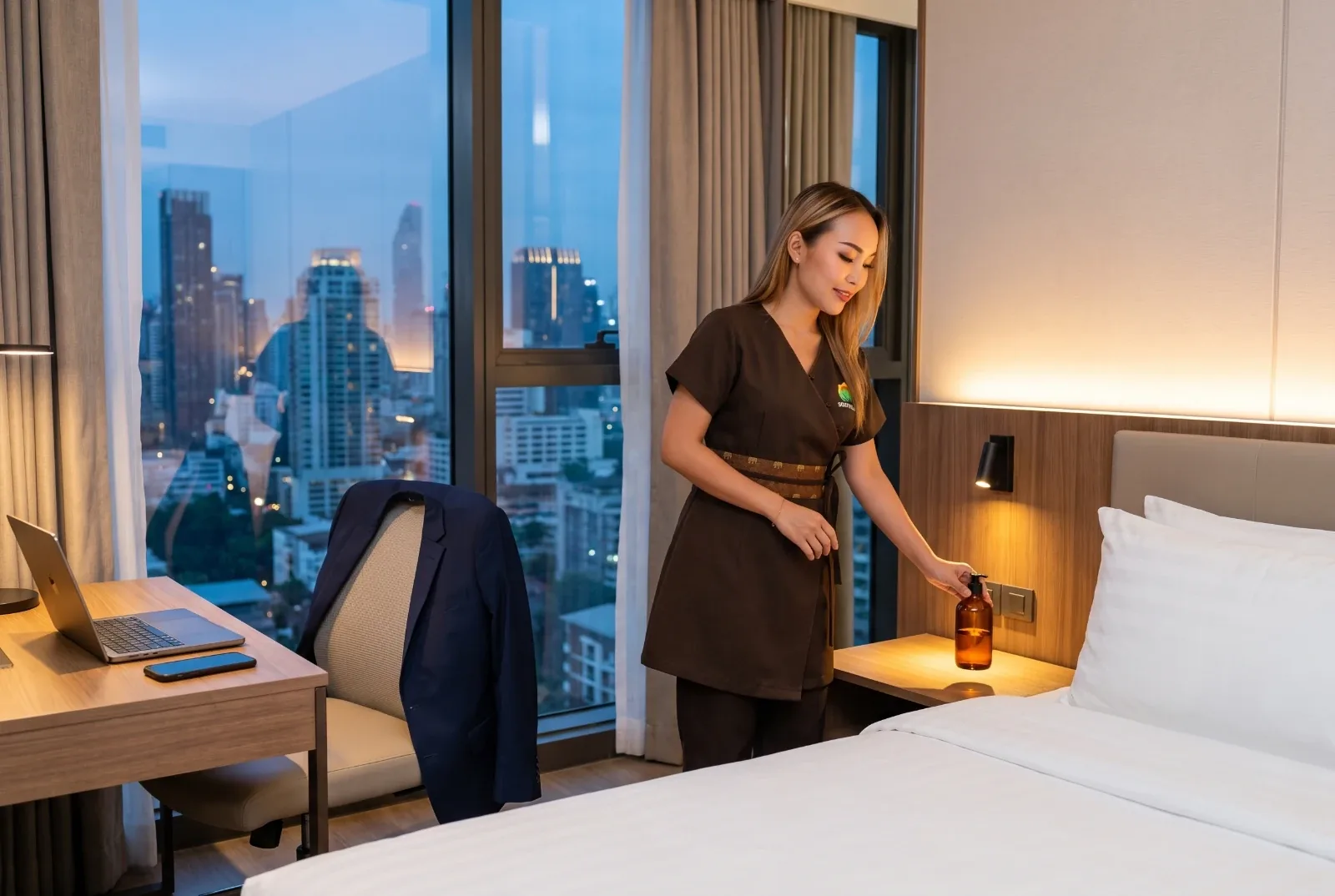
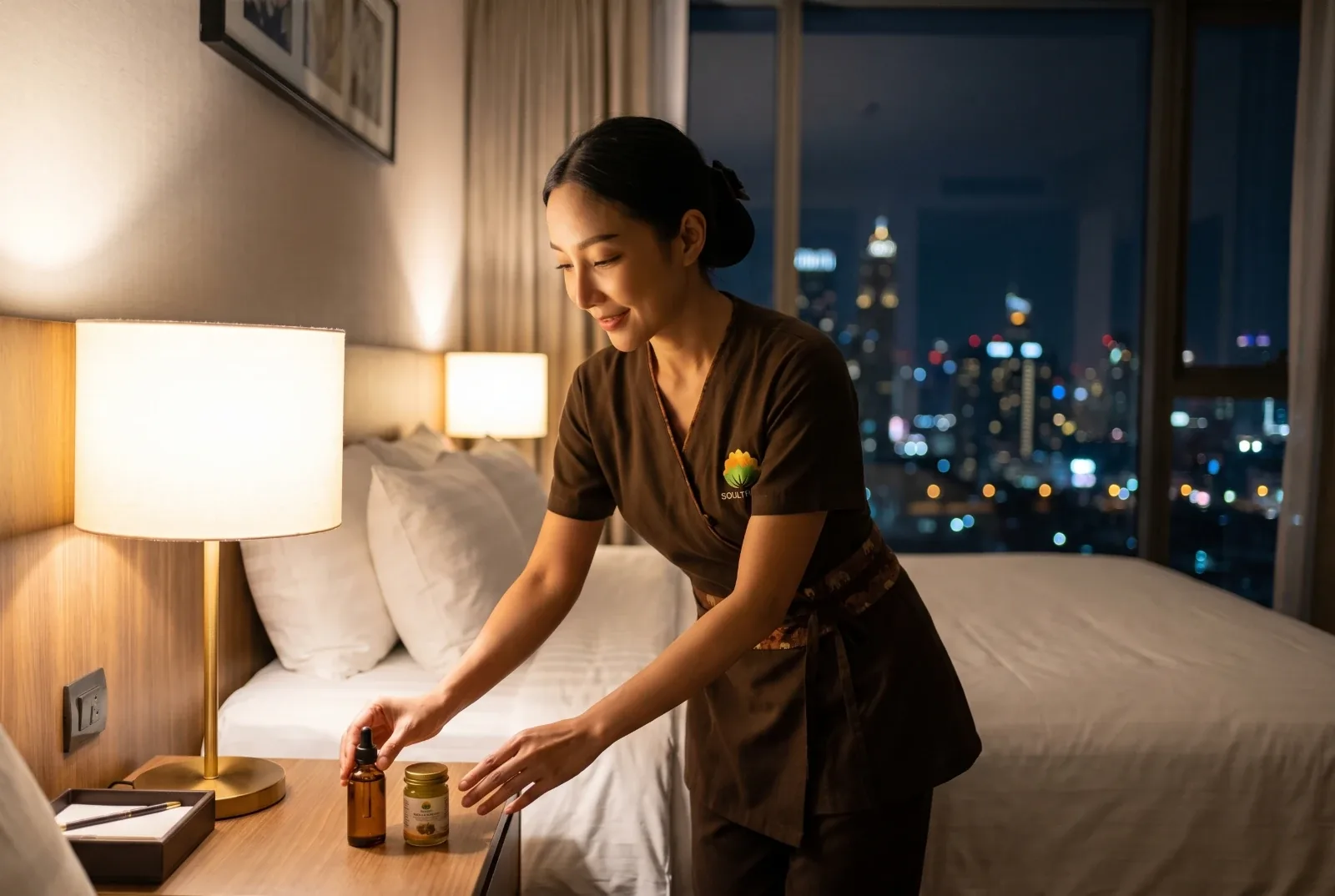
The easiest way to recover from business travel in Bangkok is a massage in your hotel room. Soul Treats Bangkok sends a therapist every day from noon to 3am, usually about 40 minutes after you book, so a session fits after a long-haul flight or a late client dinner. Traditional Thai starts at THB 800 for 60 minutes; 90 minutes suits the first night.
- Book a 90 minute session within 24 hours of a long-haul arrival.
- In-room massage takes minutes to book, with no taxi across town.
- Sessions run until 3am, so a late client dinner is no obstacle.
- Pay by Visa or Mastercard, Thai QR, bank transfer or cash.
What does a long-haul flight do to your body?
Many travellers step off a long-haul flight stiff, dehydrated and short on sleep. Cabin air is pressurised to the equivalent of roughly 6,000 to 8,000 feet and is very dry, and ten or twelve hours in a seat with little movement tends to leave tightness in the hips, lower back, shoulders and neck.
Add the load of switching time zones, broken sleep and the sustained alertness that meetings demand, and your body is working against itself. Decisions take more effort, fatigue compounds and the margin for error narrows. Bangkok is one of Asia's most important business destinations, whether you are here for a two-day conference, a week of client meetings or a project that keeps you in the city for months. Most business travellers accept the toll as the cost of the job. The best ones have learned to manage it actively, because for senior professionals in high-stakes settings, physical recovery is not a luxury but part of performing well.
Why is Thai massage a good choice after a flight?
Traditional Thai massage combines acupressure with passive stretching, which suits the areas long periods of sitting leave tight: hips, lower back, upper back, shoulders and neck. Of all the massage styles in Bangkok, it is the one most closely matched to the way business travel affects the body.
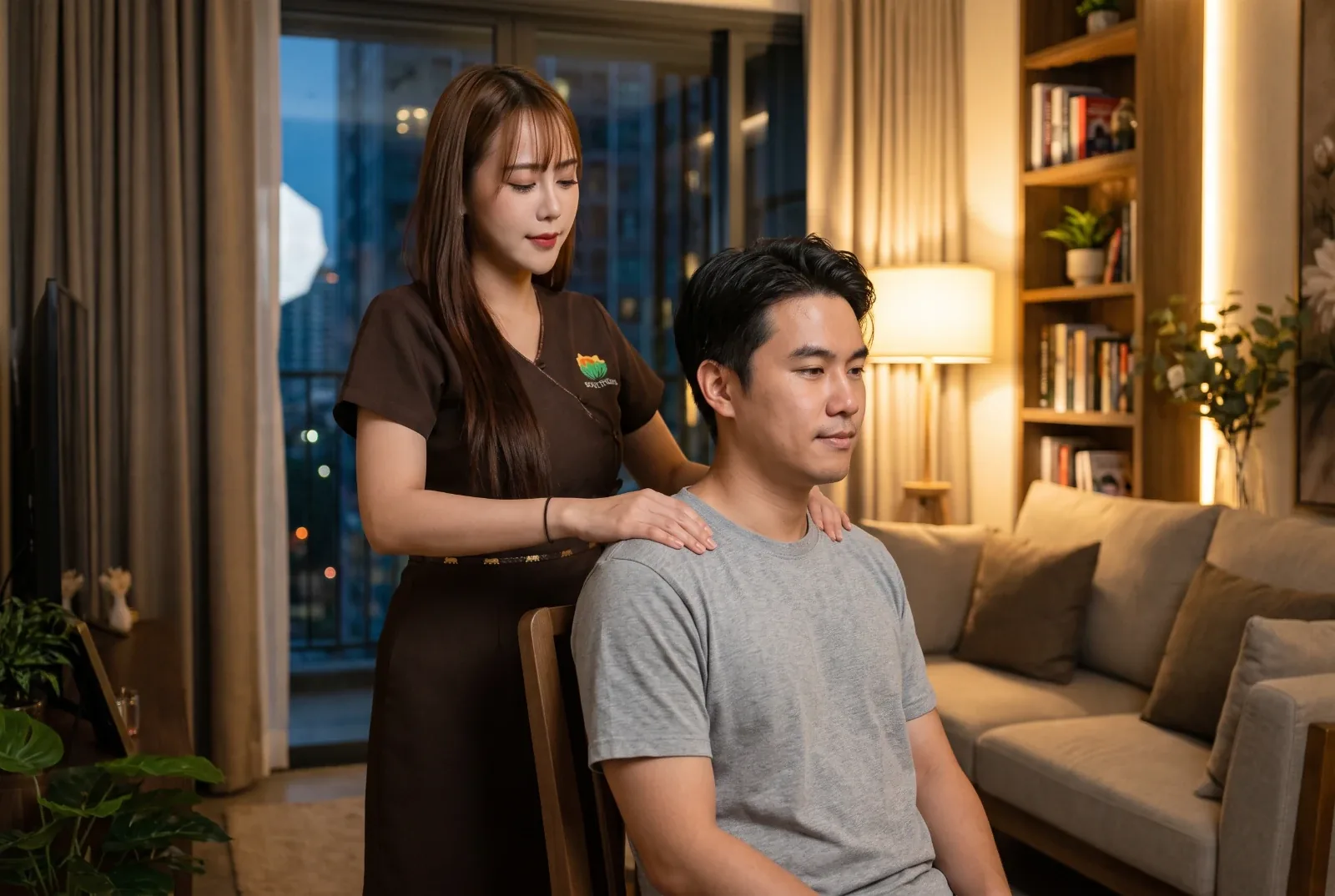
You stay in comfortable clothes on your own bed while a skilled therapist works along the body and eases you through stretches. Many guests say it feels as if the session undoes what twelve hours in an aircraft seat did, and they come away looser and more mobile, not just relaxed. Traditional Thai massage starts at THB 800 for 60 minutes and THB 1,000 for 90.
Two other treatments suit business trips well. If your days are spent over a laptop, deep tissue massage uses slow, firm pressure across the shoulders and upper back, from THB 1,000. And when what you need is to quiet a busy mind rather than loosen muscles, aromatherapy massage is the gentler reset, from THB 1,100.
Why book in-room instead of going to a spa?
Because it saves the two to three hours a spa visit usually costs. Finding a reputable place, travelling there through Bangkok traffic, waiting, having the treatment and getting back to your hotel rarely fits around a 7am breakfast meeting.
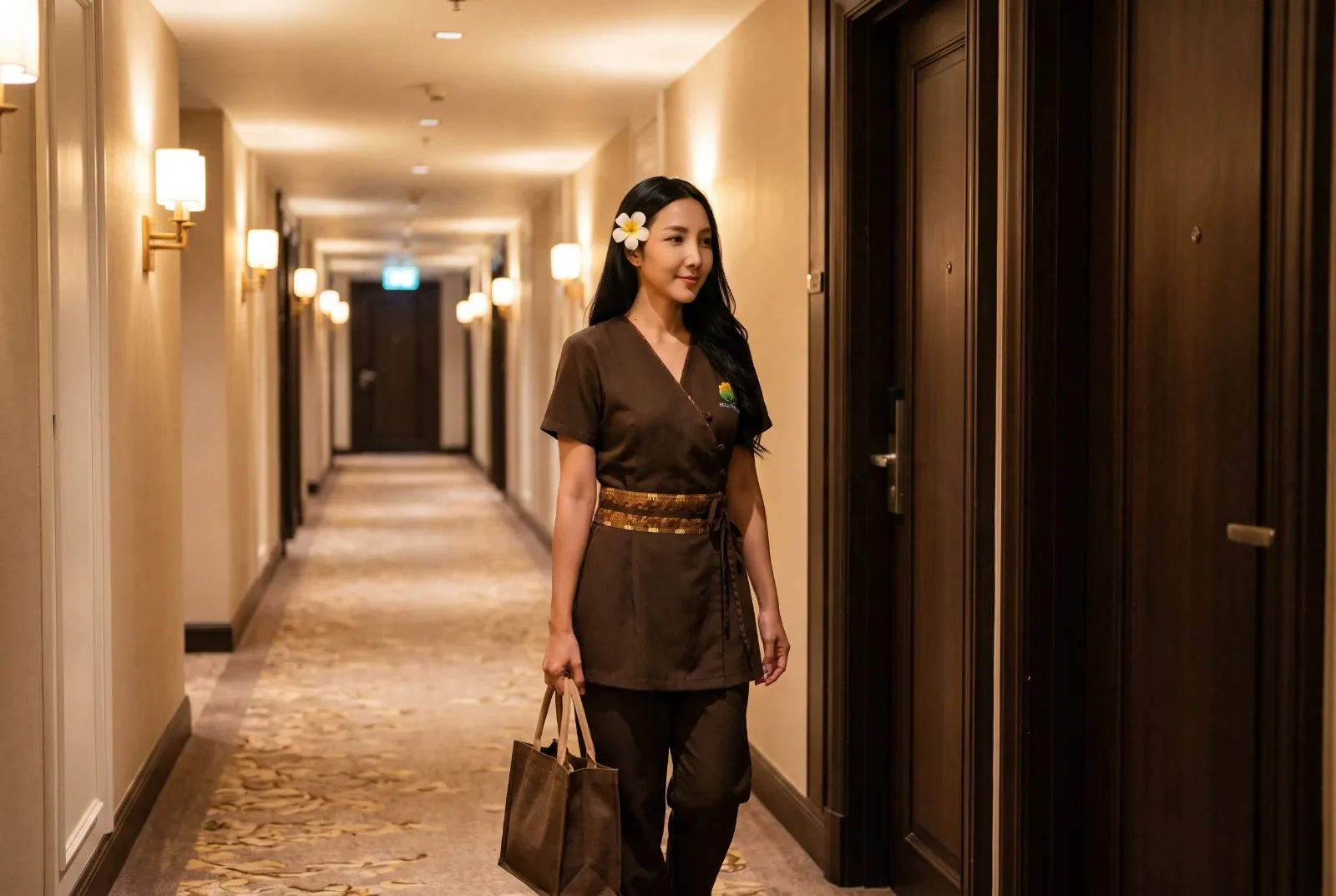
An in-room session changes the calculation. You spend about five minutes on your phone booking, and around 40 minutes later a therapist is at your door in the brown Soul Treats uniform with the oils and balm, ready to begin on your own bed. The treatment takes 60, 90 or 120 minutes, and when it ends you are already where you need to be. The BTS and MRT make daytime meetings in Asok, Silom and Sathorn easy enough, but after a client dinner nobody wants another taxi across town.
There is also the quality of the rest. Walking out of a spa into the noise and traffic of Sukhumvit Road partly undoes what you have just gained. In your own room you can lie still, let the session settle, fall asleep if your body needs it and wake up genuinely restored. Our page on in-room massage at Bangkok hotels explains how arrivals work at the front desk.
When should you book a massage on a business trip?
The single most valuable session is a 90 minute massage within 24 hours of landing. After that, fit treatments around the shape of your week:
| Your situation | What to book | Price |
|---|---|---|
| Just landed at Suvarnabhumi or Don Mueang | Traditional Thai, 90 minutes, within 24 hours | THB 1,000 |
| Long days at a conference or in meetings | Deep Tissue, 60 minutes, focused on the shoulders and back | THB 1,000 |
| An intense week of presentations or negotiations | Aromatherapy, 90 minutes, mid-week | THB 1,400 |
| Back late from a client dinner | Oil Relaxation, 60 minutes, as late as 2am | THB 900 |
| Staying for weeks or months | Traditional Thai, 60 minutes, once a week | THB 800 |
Timing matters most for the first session: addressing the effects of travel while they are fresh stops them compounding over the following days. During a heavy week, a mid-week aromatherapy session works less on the muscles and more on quieting the stress that builds under sustained pressure. For longer stays, a weekly 60 minute Thai massage is enough to keep tension at bay; think of it as maintenance for your most important piece of equipment. Late meetings are not a problem either, as our guide to late-night massage in Bangkok explains.
Book from the airport taxi. The drive from Suvarnabhumi into Sukhumvit or Silom often takes 30 to 60 minutes. Message us on the way with your hotel and arrival time, and your therapist can be at your door soon after you check in.
How do you get the most from a massage in a business hotel?
Tell us what you need when you book, and treat the session as time off the clock. A few details make a real difference:
- Mention where you hold tension. Shoulders from laptop work, a stiff back after the flight, tired legs from a day on a conference floor: say so when booking and your therapist will adjust the approach.
- Say how firm you like it. Pressure can be changed at any point during the session.
- Tell reception you are expecting a therapist. Some hotels ask visitors to register at the front desk, especially in the evening.
- There is nothing to set up. The massage takes place on your own bed, and your therapist brings the oils and balm.
- Silence your phone. The emails will still be there in 90 minutes.
- Pay the way you prefer. We accept Visa and Mastercard, Thai QR (PromptPay), bank transfer and cash, and the price is confirmed before your therapist sets off.
If you visit Bangkok often, you can ask for a favourite therapist when booking, subject to availability, so each trip starts with someone who already knows how you like your massage. Whether you are staying near the Queen Sirikit National Convention Centre, around the Asok business district or among the office towers of Silom and Sathorn, a therapist can come to your hotel.
What is the one mistake most business travellers make?
They wait too long. They land in Bangkok, push through the jet lag, deliver the meetings, attend the dinners and plan to sort themselves out at the end of the trip. By then there is rarely time, or they are simply too tired to organise anything.
The better approach is to schedule recovery at the same moment you schedule everything else. Book your massage before you book your restaurant. Your body will thank you, and so will your performance in the meeting room.
Frequently asked questions
Can I get a massage in my hotel room right after a flight to Bangkok?
Yes. Message us with your hotel and arrival time, even from the airport taxi, and a therapist usually reaches you about 40 minutes after booking. Soul Treats Bangkok is open every day from noon to 3am, so evening and late-night arrivals are covered. A 90 minute traditional Thai massage at THB 1,000 is a good first-night choice.
What is the best massage after a long-haul flight?
Many travellers choose traditional Thai massage after a long flight, because its stretching and palm pressure work through the hips, back and shoulders that long hours of sitting leave stiff. If you would rather switch off and sleep, an oil or aromatherapy massage is gentler. Either way, 90 minutes gives time for the whole body.
Can I pay by credit card for an in-room massage in Bangkok?
Yes. You can pay by Visa or Mastercard credit or debit card, Thai QR (PromptPay), bank transfer or cash. The full price is confirmed on WhatsApp or LINE before your therapist sets off, and the quoted price is the price you pay, which keeps travel spending simple to track.
How much of my evening does an in-room massage take?
Little more than the treatment itself: 60, 90 or 120 minutes, and there is nothing to set up, as the massage takes place on your own bed. Booking takes about five minutes by message, and the therapist usually arrives about 40 minutes later while you shower or finish emails. Compare that with two or three hours to reach a spa through Bangkok traffic and come back.
Can I book the same therapist each time I visit Bangkok?
You can ask for a favourite therapist every time you book, subject to availability. Messaging a day or two before you arrive, with your hotel and preferred time, makes it easier to secure both the slot and the therapist you want, especially for evenings and the latest slots of the night.
Published 10 June 2026 · Soul Treats Bangkok