Deep tissue vs Thai massage: which is better for tight muscles?
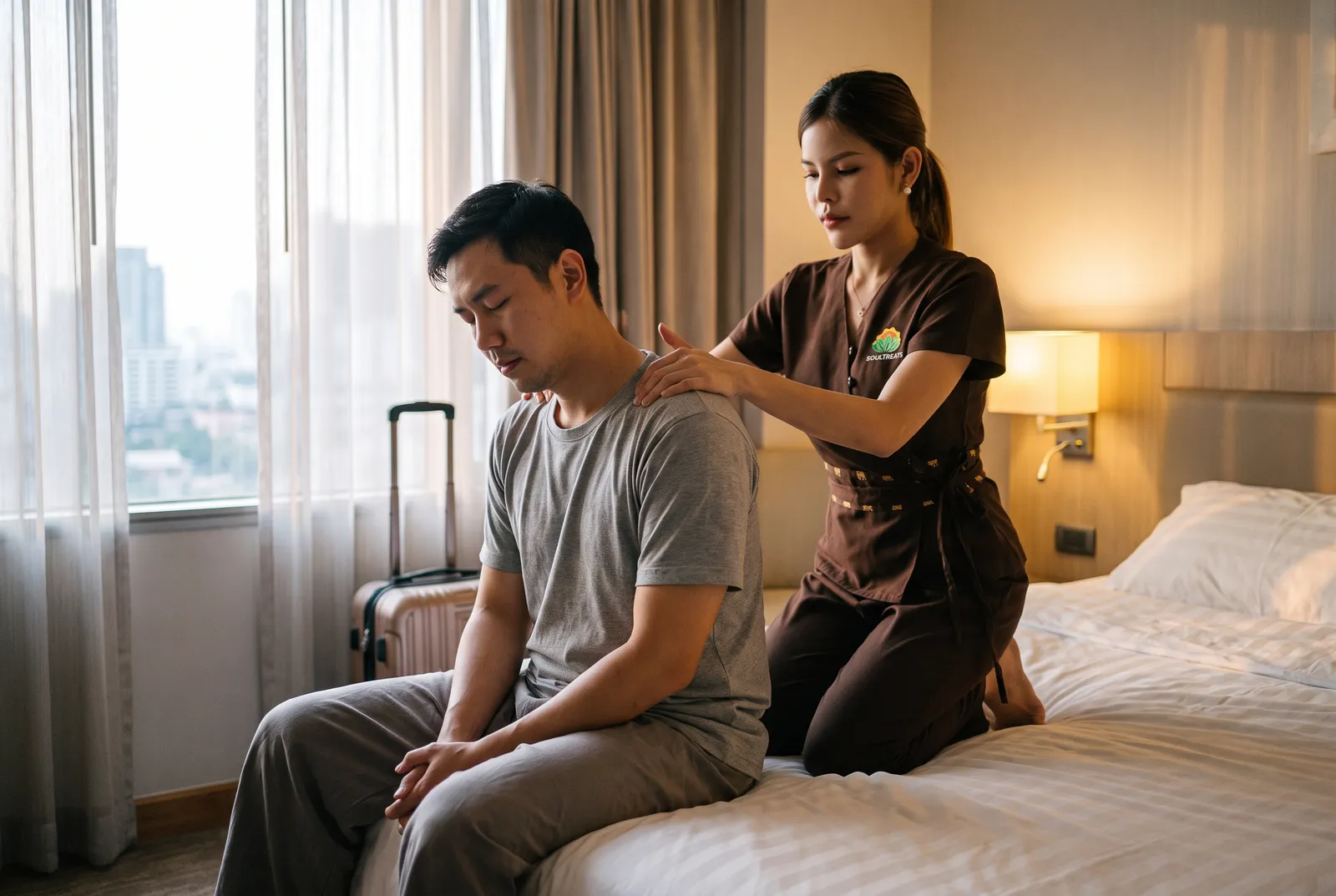
Choose deep tissue massage when you have specific knots or tight spots, such as the shoulders or lower back, and want slow, firm pressure worked into them with oil. Choose traditional Thai massage when you feel stiff all over and want rhythmic pressure plus stretching to restore movement, in loose clothes with no oil.
- Deep tissue: slow, firm pressure with oil, focused on knots.
- Thai: pressure along the sen lines plus assisted stretches, no oil.
- Desk stiffness and knots suit deep tissue; travel stiffness suits Thai.
- Thai from THB 800 and deep tissue from THB 1,000 for 60 minutes.
What is the difference between deep tissue and Thai massage?
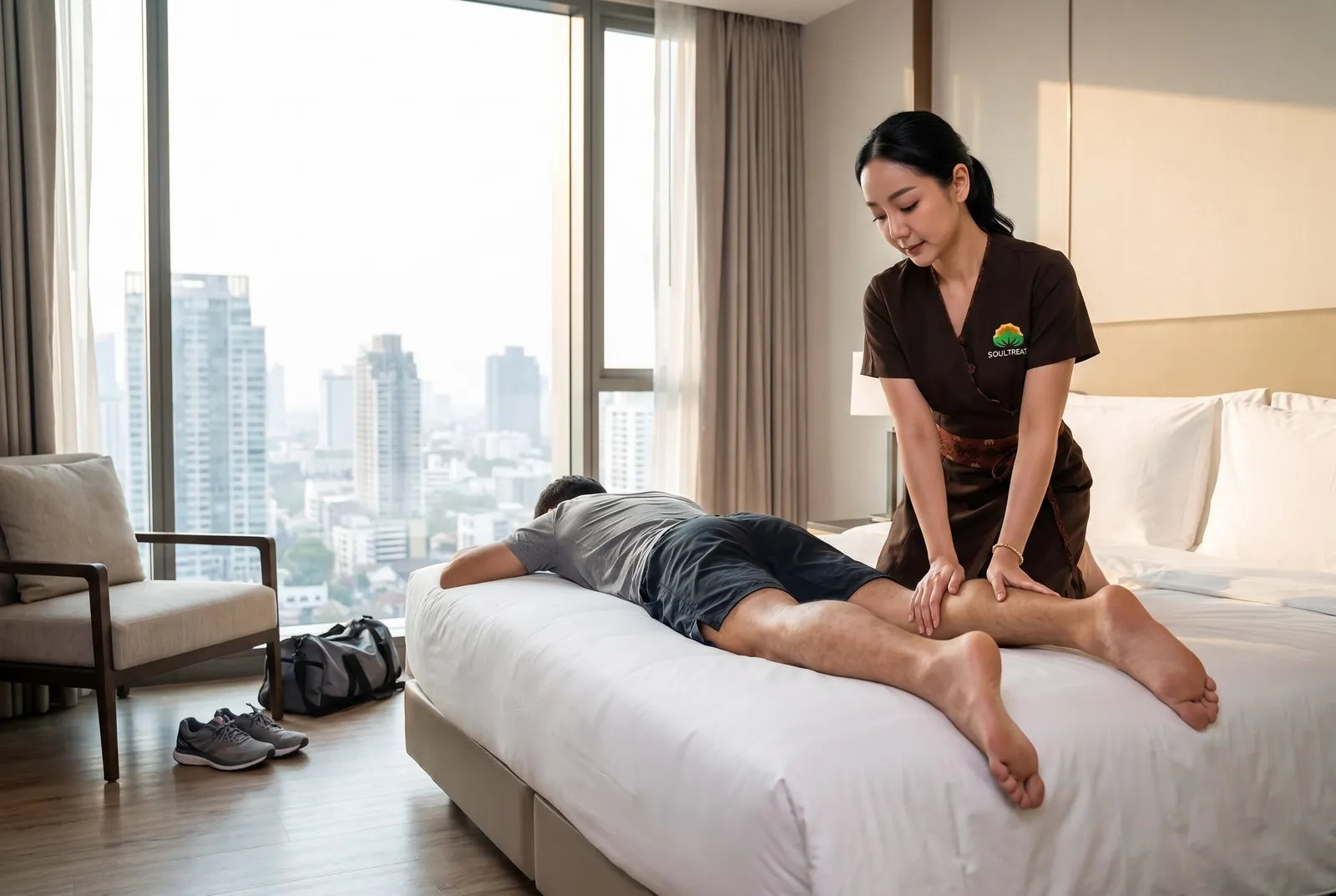
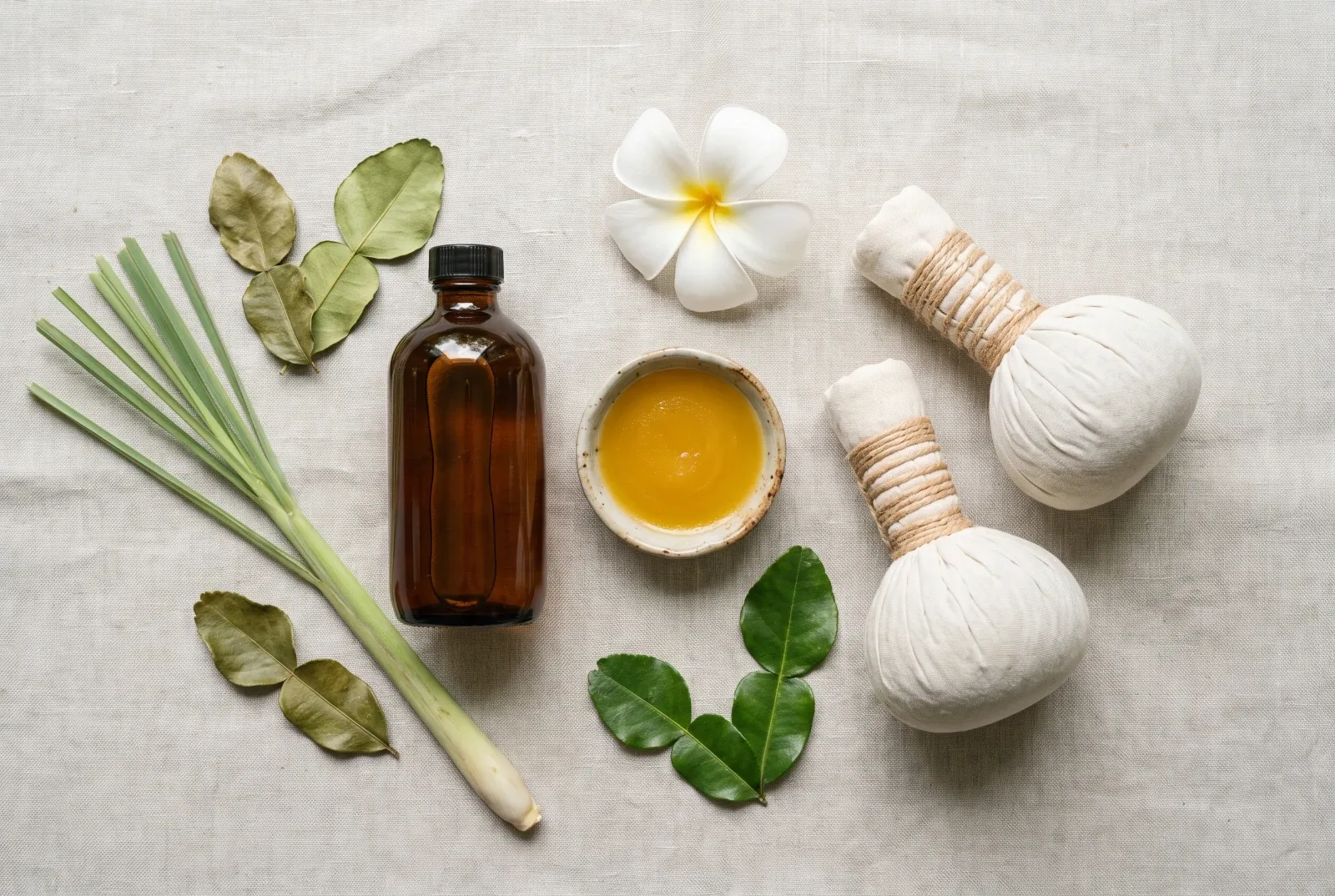
Both can be firm, but they work in different ways. Deep tissue massage uses oil and slow, sinking pressure from the thumbs, knuckles and forearms to work into specific tight areas. Traditional Thai massage uses rhythmic palm and thumb pressure along the body's traditional sen lines, combined with assisted stretches, and is given in loose clothing without oil.
| Deep tissue | Traditional Thai | |
|---|---|---|
| Technique | Slow, firm pressure into specific knots | Rhythmic pressure and assisted stretches |
| Oil | Yes | No |
| What you wear | Covered by the bed sheet | Loose, comfortable clothing |
| Best for | Knots in shoulders, neck and lower back | All-over stiffness, flexibility |
| Feels like | Focused and intense, then loose | Energising, then light |
| 60 / 90 / 120 min | THB 1,000 / 1,300 / 1,600 | THB 800 / 1,000 / 1,300 |
Which is better for knots in the shoulders and neck?
Deep tissue, usually. If you can point to the spot that hurts, such as a knot under the shoulder blade or tightness at the base of the neck from hours at a laptop, deep tissue lets your therapist slow down and stay on that area. The oil allows long, gliding strokes to warm the muscle first, then slow pressure into the tight spot.
Tell your therapist where the tension is before she starts, and how firm you would like it. Deep tissue should feel strong but not sharp, and you can ask for lighter pressure at any time. Book it on our deep tissue massage page.
Which is better after a long flight?
Traditional Thai, for most people. After hours in a plane seat the whole body feels compressed rather than knotted in one place, and Thai massage's stretches open the hips, back and shoulders while the pressure along the legs eases heavy, swollen feeling legs. Because there is no oil, you can go straight to dinner or a meeting afterwards. See our traditional Thai massage page.
Which is better after training or Muay Thai?
It depends on how you feel. The day after a hard session, when specific muscles are tight, deep tissue lets your therapist work into the calves, hamstrings or shoulders. For general recovery and mobility between sessions, Thai massage's stretching is excellent. Many people who train regularly alternate the two. Our guide to sports massage in Bangkok has more detail.
Is deep tissue massage painful?
It should not be painful. Deep tissue is firm and you will feel it, especially on tight areas, but good pressure feels like a satisfying release, not a sharp pain. Your therapist checks in as she works; tell her straight away if anything feels too strong. If you are new to firm massage, a traditional Thai session is a gentler introduction.
If you are managing an injury, a medical condition or a pregnancy, check with your doctor before booking either treatment, and tell us when you book.
Can I combine the two?
Each session is one treatment, but you can mix approaches across a longer booking. Many guests book 90 or 120 minutes of deep tissue and ask the therapist to spend extra time on the problem area, or book Thai one evening and deep tissue the next. If you want something softer altogether, oil relaxation is our gentlest option.
Frequently asked questions
Is deep tissue massage stronger than Thai massage?
Not always. Both can be firm. Deep tissue applies slow, sustained pressure with oil to specific tight areas, while Thai massage uses rhythmic pressure and stretching across the whole body. Your therapist agrees the pressure with you before either session.
Which massage is best for lower back pain from sitting?
For tight lower back muscles from long hours at a desk, deep tissue lets your therapist work slowly into the area. If you also feel stiff in the hips and hamstrings, Thai massage's stretches can help. If the pain is sharp, persistent or follows an injury, see a doctor first.
Do I need to undress for deep tissue massage?
Deep tissue uses oil, so you undress to the level you are comfortable with, and keeping your underwear on is fine. You stay covered by the bed sheet throughout, apart from the area being worked on. Thai massage is given fully clothed in loose clothing.
How much does deep tissue massage cost in Bangkok?
At Soul Treats, deep tissue is THB 1,000 for 60 minutes, THB 1,300 for 90 and THB 1,600 for 120, at your hotel, condo or home. Traditional Thai is THB 800, THB 1,000 and THB 1,300. There is no travel charge within 7 km of Sukhumvit Soi 22.
How long should my session be for knots?
For one or two problem areas, 60 minutes is often enough. If you want the whole body worked plus extra time on tight shoulders or lower back, 90 minutes gives your therapist time to do both without rushing.
Published 20 October 2026 · Soul Treats Bangkok