
Sports massage in Bangkok: after Muay Thai, running, gym or golf
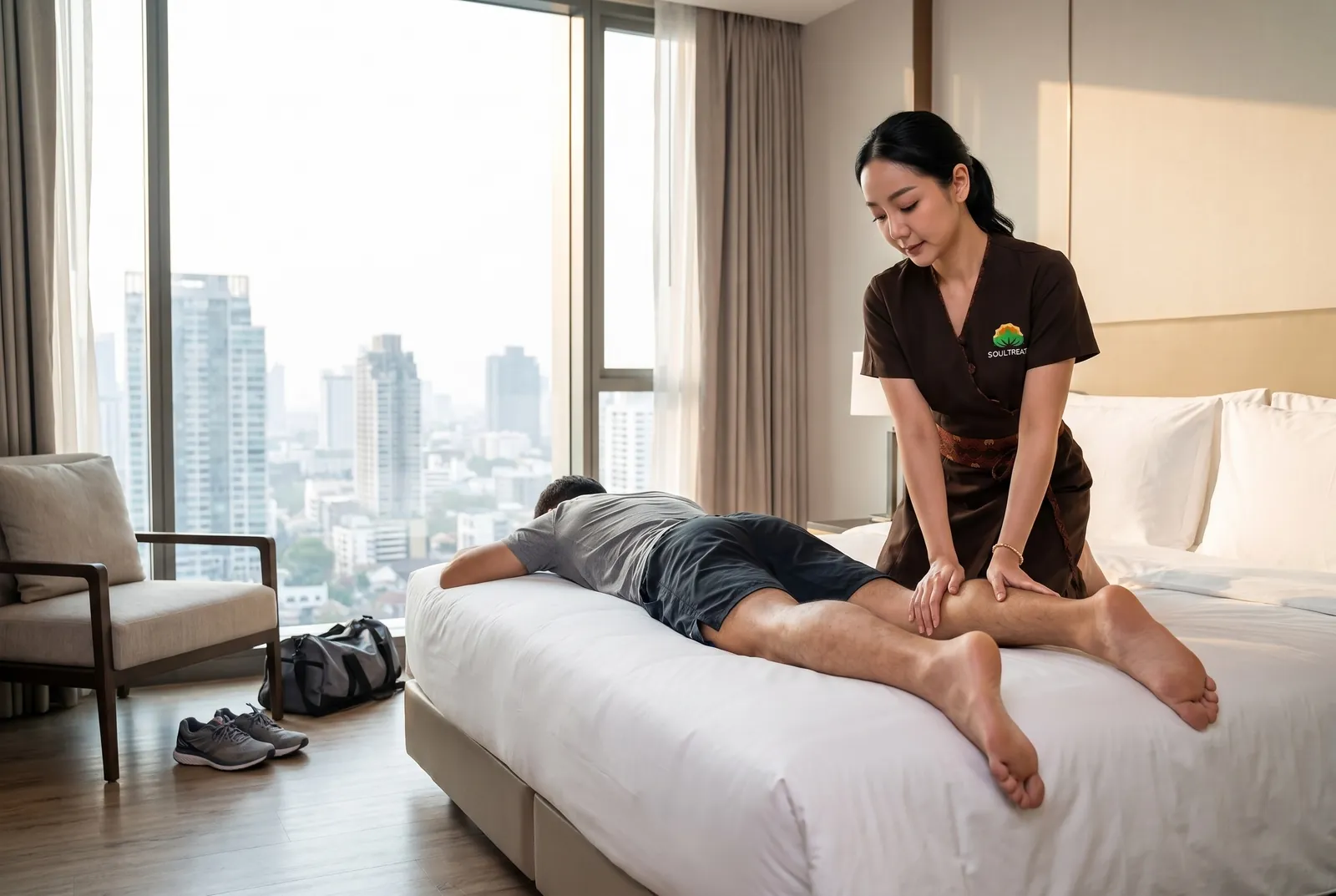
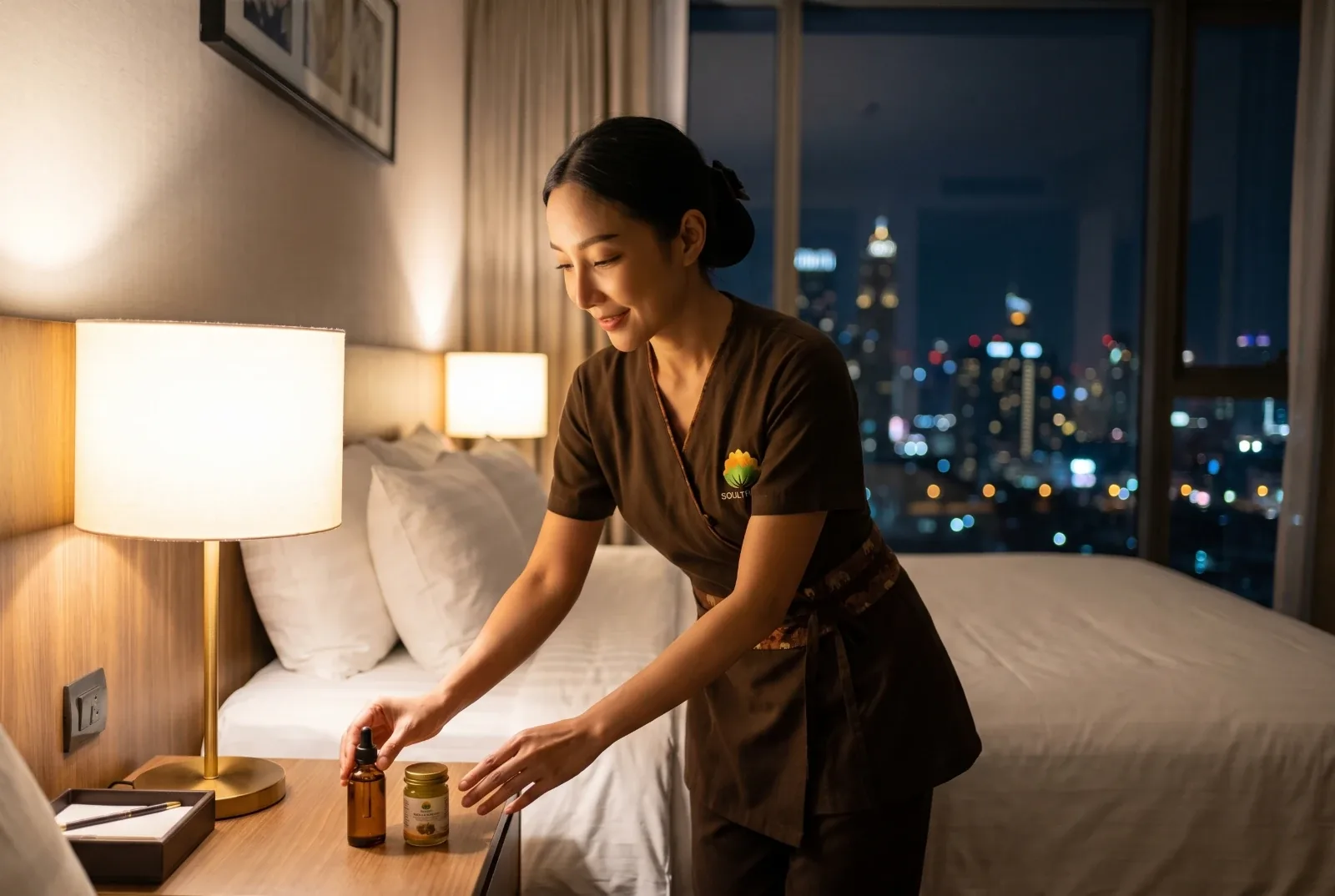
For a sports massage in Bangkok, most people who train choose deep tissue after lifting or Muay Thai, traditional Thai after running or golf, and herbal balm when muscles feel stiff and cold. Soul Treats Bangkok brings all three to your hotel room or condo, usually in about 40 minutes, from noon to 3am. Deep tissue costs THB 1,000 for 60 minutes.
- Deep tissue for heavy shoulders and legs, Thai for stiffness, herbal balm for warmth.
- Cool down, shower and eat before a massage on a training day.
- Say "firmer" or "softer" at any time. Firm should never mean painful.
- Skip massage and see a doctor for swelling, sharp pain or a fresh injury.
Which massage is best after Muay Thai, running, the gym or golf?
Deep tissue suits most people after heavy training, traditional Thai suits anyone who feels stiff and wants to move more freely, and herbal balm suits tired muscles that enjoy warmth. The right choice depends less on the sport than on how your body feels when you get back to your room.
Visitors come for a week at a Muay Thai camp, runners lap Lumphini Park or Benjakitti Park before the heat builds, residents lift in gyms along Sukhumvit and in Thong Lo, and golf groups spend long days on courses outside the city. Each leaves its own kind of tightness:
| After | Where it often feels tight | A good first choice |
|---|---|---|
| Muay Thai | Shoulders and neck from the clinch, hips, calves and thighs from kicking | Deep tissue, or Thai on lighter days |
| Running | Calves, hamstrings, hips and the soles of the feet | Traditional Thai, or deep tissue on the legs |
| The gym | Whatever you trained: upper back and chest after pressing, legs and lower back after squats | Deep tissue |
| Golf | Lower back, shoulders and forearms from the rotation and a long day on your feet in the heat | Herbal balm or traditional Thai |
- Deep tissue massage uses slow, sustained pressure from the palms, thumbs and forearms on the areas you choose. It is our firmest treatment.
- Traditional Thai massage combines palm pressure and assisted stretches, with no oil and in loose clothing. Many guests find the stretches help them feel looser through the hips and back.
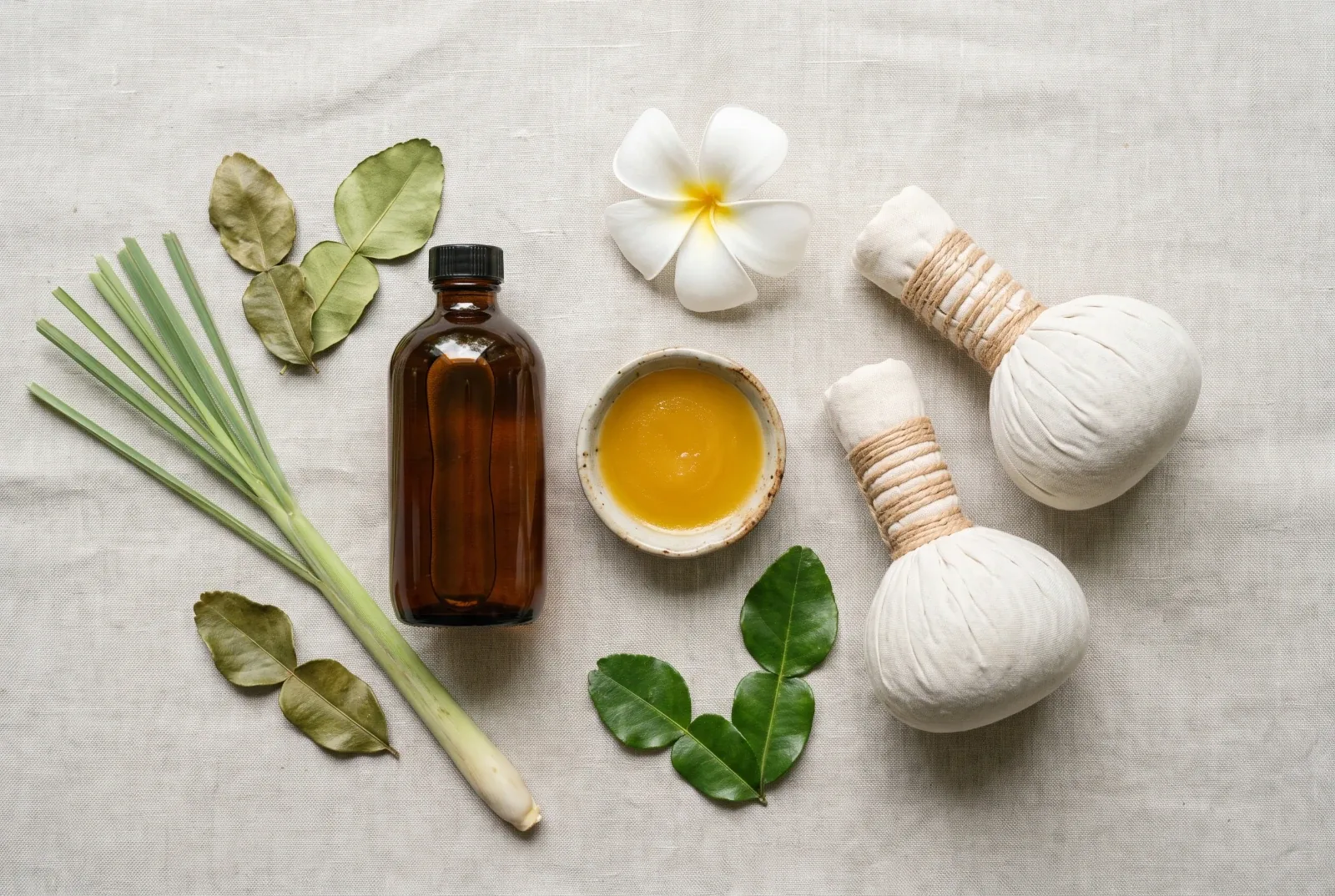
- Herbal balm massage works a warming Thai herbal balm into the back, shoulders and legs with firm, soothing strokes, a comforting choice after a long day on the course.
If you are new to Thai massage, our guide to a first Thai massage in Bangkok explains what the stretches feel like.
How soon after training should I book a massage?
A massage on the same day as training is fine for most people, as long as you have cooled down, showered, had some water and eaten something light first. For many guests that means booking for one to three hours after the session ends.
Straight after a hard class or a long run in the Bangkok heat, your body is still hot and firm pressure rarely feels good. Because a therapist usually reaches your room about 40 minutes after you book, a simple routine works well: message us when you finish, shower and eat, and your therapist arrives soon after.
We are open every day from noon to 3am, so a booking at 9pm or 10pm after an evening class is easy to arrange. After a very hard session, a race or a fight, many people prefer lighter pressure that day and save firm deep tissue for the day after. In the day or two before a big event, a gentler session is usually the more comfortable choice.
How firm should a sports massage be, and how do I tell the therapist?
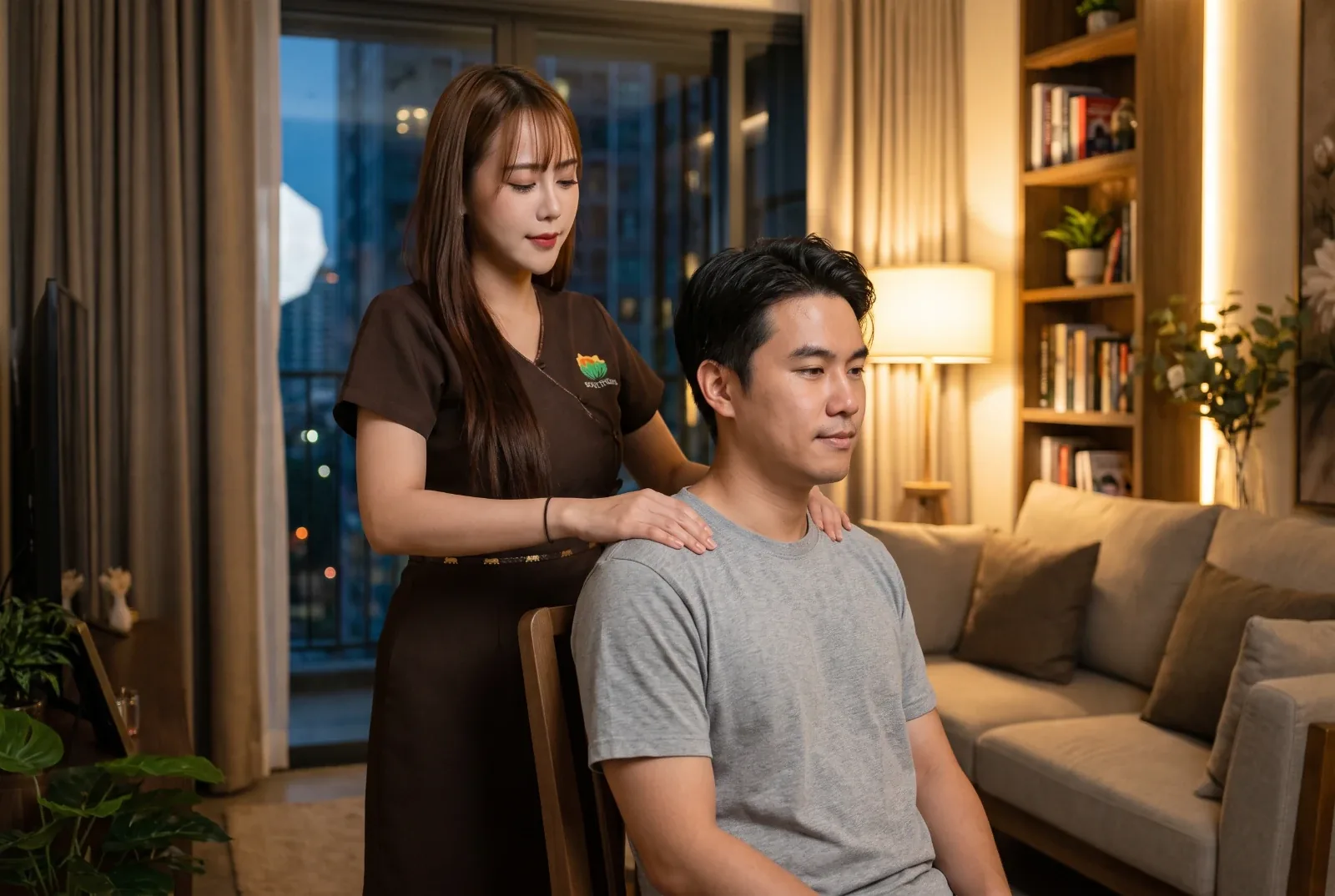
Firm enough to feel strong and satisfying, never so firm that you tense up, hold your breath or pull away. Tell your therapist the pressure you like before you start, and say "firmer" or "softer" at any point during the session.
A simple way to talk about pressure is a scale of one to ten, where one is barely there and ten is too much. Saying "six on the tight areas, four elsewhere" is a quick way to agree. Your therapist builds the pressure gradually and checks in as she goes. All our therapists are women, and deep tissue work comes from slow technique with the thumbs, palms and forearms, so ask for as much pressure as you are comfortable with.
- Before you start: say whether you like light, medium or firm pressure, and which areas you want the most time on.
- During the session: "a bit firmer", "softer there" or "leave that spot" is all you need to say.
Mild tenderness the next day can happen after firm work and usually fades within a day or so. Sharp or lasting pain is not normal.
What should I tell my therapist before we start?
Tell her which areas feel tight, what you trained that day, and about any recent knocks, bruises or sore spots she should avoid. A minute of conversation at the start makes the whole session more useful.
Useful things to mention:
- The areas that feel tightest, for example calves after a long run, the upper back after bench pressing, or the lower back after a round of golf.
- Any bruising, especially on the shins, thighs and ribs after Muay Thai sparring, so those spots are left alone.
- Any old injury, recent surgery or medical condition, and anything your doctor or physiotherapist has told you to avoid.
- Stretches that do not suit you in a Thai massage, such as deep hip or neck stretches if those areas are sensitive.
For deep tissue and balm you stay covered by the bed sheet, apart from the area being worked on. For Thai massage, loose shorts and a T-shirt are ideal.
How often should I get a massage during a training block or a training holiday?
During a regular training block at home in Bangkok, many residents book once a week or once every two weeks. On a training holiday, with two sessions a day at a camp, many guests book every two or three days.
There is no fixed rule, so listen to how you feel. On a week at a Muay Thai camp, one simple pattern is a 90 minute deep tissue session midweek and a traditional Thai massage at the weekend. Runners training for a race often prefer to book in the easier weeks. If you share a room with a training partner, two therapists can come at the same time, and each of you can choose a different treatment and length.
If you would like the same therapist each time, ask for her by name when you book, subject to availability.
When should I skip massage and see a doctor instead?
Skip the massage and see a doctor if you have a fresh injury, swelling, sharp or shooting pain, or anything that gets worse when you move. Massage is for general tightness and tired muscles, not for injuries.
It is not always easy to tell soreness from injury, so check with a doctor or physiotherapist before booking if you have:
- A joint or muscle that is swollen, hot to the touch or badly bruised.
- Sharp, stabbing or shooting pain, or pain that stops you putting weight on a leg or lifting an arm.
- Numbness, tingling or weakness in an arm or leg.
- A blow to the head, or dizziness or a headache after sparring.
- A fever, a skin infection or an open cut in the area you want massaged.
Once a doctor is happy for you to have a massage, tell us when you book and tell your therapist before you start, so she can adjust the pressure and avoid the area.
How much does a sports massage cost in Bangkok?
Deep tissue costs THB 1,000 for 60 minutes, THB 1,300 for 90 and THB 1,600 for 120. Traditional Thai is THB 800, THB 1,000 and THB 1,300, and Herbal Balm is THB 1,200, THB 1,500 and THB 1,700.
Sixty minutes suits one or two focus areas, and ninety leaves time for both the legs and the back. We confirm the price before your therapist sets off, and the quoted price is the price you pay. There is no travel charge within 7 km of Sukhumvit Soi 22, which covers the gyms and condos of Sukhumvit and Thong Lo and Ekkamai, as well as the areas around Lumphini Park and Benjakitti Park. Further out, we quote the taxi fare before anyone sets off.
You can pay in cash, by Thai QR (PromptPay), by bank transfer, or with a Visa or Mastercard. Cancellation is free up to 1 hour before the start time, and tips are optional. Every treatment and length is on our prices page.
Frequently asked questions
Is Thai massage or deep tissue better after Muay Thai?
Both work well, for different days. Deep tissue suits heavy shoulders, hips and legs after sparring or pad work, because it spends longer on fewer areas with slow, firm pressure. Traditional Thai adds assisted stretches, which many guests enjoy on lighter days. Tell your therapist about any shin or rib bruises so she avoids them.
Can I get a massage on the same day as a run at Lumphini Park?
Yes. Many guests book for the afternoon after a morning run at Lumphini Park or Benjakitti Park, once they have cooled down, showered and eaten. A therapist usually reaches your hotel or condo about 40 minutes after you book, and we are open every day from noon to 3am.
What if the pressure feels too strong during a deep tissue massage?
Say so straight away and your therapist softens the pressure. Firm work should feel strong and satisfying, not painful, and you should be able to breathe normally and stay relaxed. A one to ten scale helps: say six on the tight areas and four elsewhere, for example.
Should I have a massage if my muscle is swollen or I think I pulled something?
No. Swelling, sharp pain, heavy bruising or a joint that hurts when you move it are reasons to see a doctor or physiotherapist first, not to book a massage. Once they are happy for you to have one, tell us when you book so your therapist can adjust the pressure and avoid the area.
Which massage suits golfers after a day on the course?
Herbal balm massage is a comfortable choice, working a warming Thai balm into the back, shoulders and legs with firm, soothing strokes. Traditional Thai is the other good option, because many guests find its stretches help the hips and back feel looser after a day of swinging and walking. Herbal balm costs THB 1,200 for 60 minutes and Thai costs THB 800.
Published 26 September 2026 · Soul Treats Bangkok